)
Earthquake : A Major Devastator of Japan
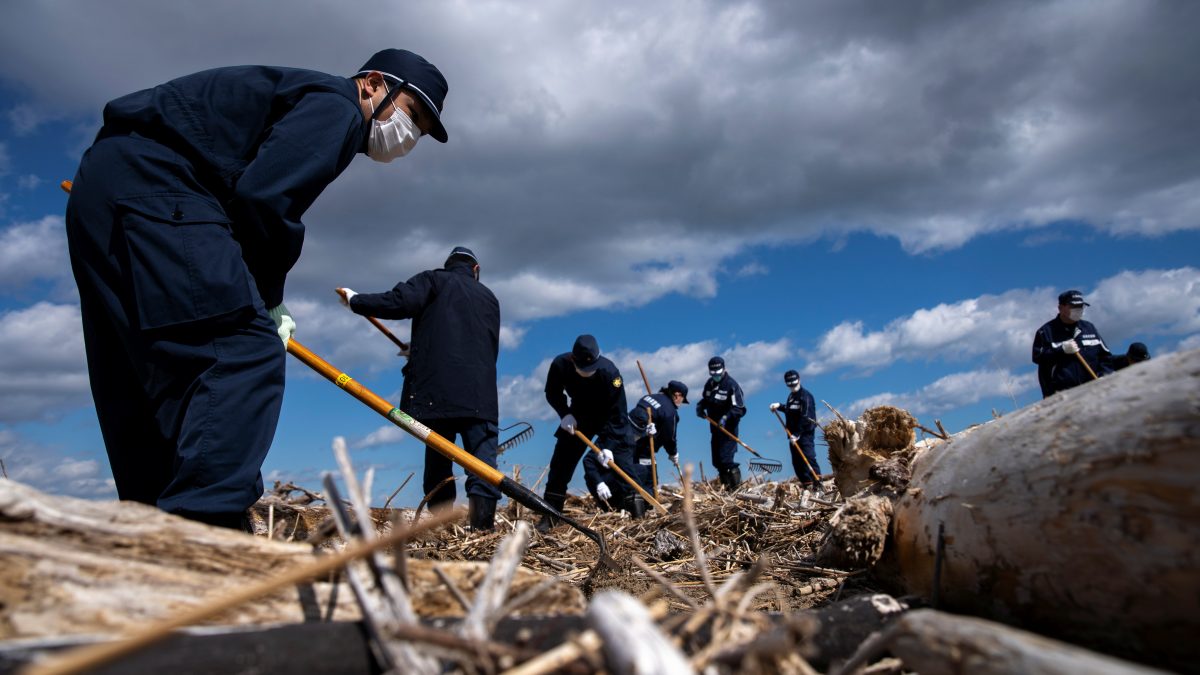
Japan’s economy could lose as much as $1.81 trillion in the event of a long-anticipated megaquake off its Pacific coast, which could trigger devastating tsunamis, the collapse of hundreds of buildings and potentially killing about 300,000 people, a government report said on Monday. The expected economic damage of 270.3 trillion yen, or nearly half of the country’s total gross domestic product (GDP), was up sharply from the previous estimate of 214.2 trillion yen as the new estimate accounted for inflationary pressures and updated terrain and ground data which have expanded anticipated flood areas, the Cabinet Office report showed. Japan is one of the world’s most earthquake-prone countries, and the government sees about an 80% chance of a magnitude 8 to 9 earthquake along a tremulous seabed zone known as the Nankai Trough. Under the worst-case scenario, based on a potential magnitude 9 earthquake in the area, Japan is likely to see 1.23 million evacuees or 10% of its total population. As many as 298,000 people could die from tsunamis and building collapses if the quake occurs late at night in winter, the report showed. The trough is off Japan’s southwest Pacific coast and runs for approximately 900 km (600 miles), where the Philippine Sea Plate is subducting under the Eurasian Plate. The accumulating tectonic strains could result in a megaquake roughly once in 100 to 150 years. Last year, Japan issued its first-ever megaquake advisory that there was a “relatively higher chance” of a quake as powerful as magnitude 9 in the trough, after a magnitude-7.1 quake occurred at the edge of the trough. A magnitude 9 quake in 2011 that triggered a devastating tsunami and the triple reactor meltdowns at a nuclear power plant in northeast Japan killed more than 15,000 people.
History of Japan
The first human inhabitants of the Japanese archipelago have been traced to the Paleolithic, around 38–39,000 years ago.
The Jomon Period
Named after its cord-marked pottery, was followed by the Yayoi period in the first millennium BC when new inventions were introduced from Asia. During this period, the first known written reference to Japan was recorded in the Chinese Book of Han in the first century AD. Around the 3rd century BC, the Yayoi People from the continent immigrated to the Japanese archipelago and introduced iron technology and agricultural civilization. Because they had an agricultural civilization, the population of the Yayoi began to grow rapidly and ultimately overwhelmed the Jomon People, natives of the Japanese archipelago who were hunter-gatherers. Between the fourth and ninth centuries, Japan’s many kingdoms and tribes gradually came to be unified under a centralized government, nominally controlled by theEmperor of Japan. The Imperial Dynesty established at this time continues to this day, albeit in an almost entirely ceremonial role. In 794, a new imperial capital was established at Heian Kyo (modern Kyoto), marking the beginning of the Heian Period, which lasted until 1185. The Heian period is considered a golden age of classical Japanese culture. Japanese religious life from this time and onwards was a mix of native Shinto practices and Buddhism.
Relation with the Outside World in the Past
Over the following centuries, the power of the imperial house decreased, passing first to great clans of civilian aristocrats — most notably the Fujiwara — and then to the military clans and their armies of samurai. The Minamoto clan under Minamoto no Yoritomo emerged victorious from the Genpei War of 1180–85, defeating their rival military clan, the Taira. After seizing power, Yoritomo set up his capital in Kamakura and took the title of shōgun. In 1274 and 1281, the Kamakura shogunate withstood two Mongol invasions, but in 1333 it was toppled by a rival claimant to the shogunate, ushering in the Muromachi period. During this period, regional warlords called daimyō grew in power at the expense of the shōgun. Eventually, Japan descended into a period of civil war. Over the course of the late 16th century, Japan was reunified under the leadership of the prominent daimyō Oda Nobunaga and his successor, Toyotomi Hideyoshi. After Toyotomi’s death in 1598, Tokugawa Ieyasu came to power and was appointed shōgun by the emperor. The Tokugawa shogunate, which governed from Edo (modern Tokyo), presided over a prosperous and peaceful era known as the Edo period (1600–1868). The Tokugawa shogunate imposed a strict class system on Japanese society and cut off almost all contact with the outside world.
Atomic Bombing
Portugal and Japan came into contact in 1543, when the Portuguese became the first Europeans to reach Japan by landing in the southern archipelago. They had a significant impact on Japan, even in this initial limited interaction, introducing firearms to Japanese warfare. The American Perry Expedition in 1853–54 more completely ended Japan’s seclusion; this contributed to the fall of the shogunate and the return of power to the emperor during the Boshin War in 1868. The new national leadership of the following Meiji era (1868–1912) transformed the isolated feudal island country into an empire that closely followed Western models and became a great power. Although democracy developed and modern civilian culture prospered during the Taishō period (1912–1926), Japan’s powerful military had great autonomy and overruled Japan’s civilian leaders in the 1920s and 1930s. The Japanese military invaded Manchuria in 1931, and from 1937 the conflict escalated into a prolonged war with China. Japan’s attack on Pearl Harbor in 1941 led to war with the United States and its allies. During this period, Japan committed various war crimes in the Asia-Pacific ranging from forced sexual slavery, human experimentation and large scale killings and massacres. Japan’s forces soon became overextended, but the military held out in spite of Allied air attacks that inflicted severe damage on population centers. Emperor Hirohito announced Japan’s surrender on 15 August 1945, following the atomic bombings of Hiroshima and Nagasaki and the Soviet invasion of Manchuria.
Freedom
The Allies occupied Japan until 1952, during which a new constitution was enacted in 1947 that transformed Japan into the constitutional monarchy and parliamentary democracy it is today. After 1955, Japan enjoyed very high economic growth under the governance of the Liberal Democratic Party, and became a world economic powerhouse. Since the Lost Decade of the 1990s, Japanese economic growth has slowed.
This post was published on March 31, 2025 2:26 pm
The People’s Republic of China is the world’s most populous country and the second-largest economy…
Saudi Arabia occupies a pivotal position at the crossroads of Europe, Asia and Africa. it…
North Korea, officially known as the Democratic People's Republic of Korea (DPRK). Situated in the…
This website uses cookies.
Read More
